Journal · Practice design
Morning practice versus evening practice
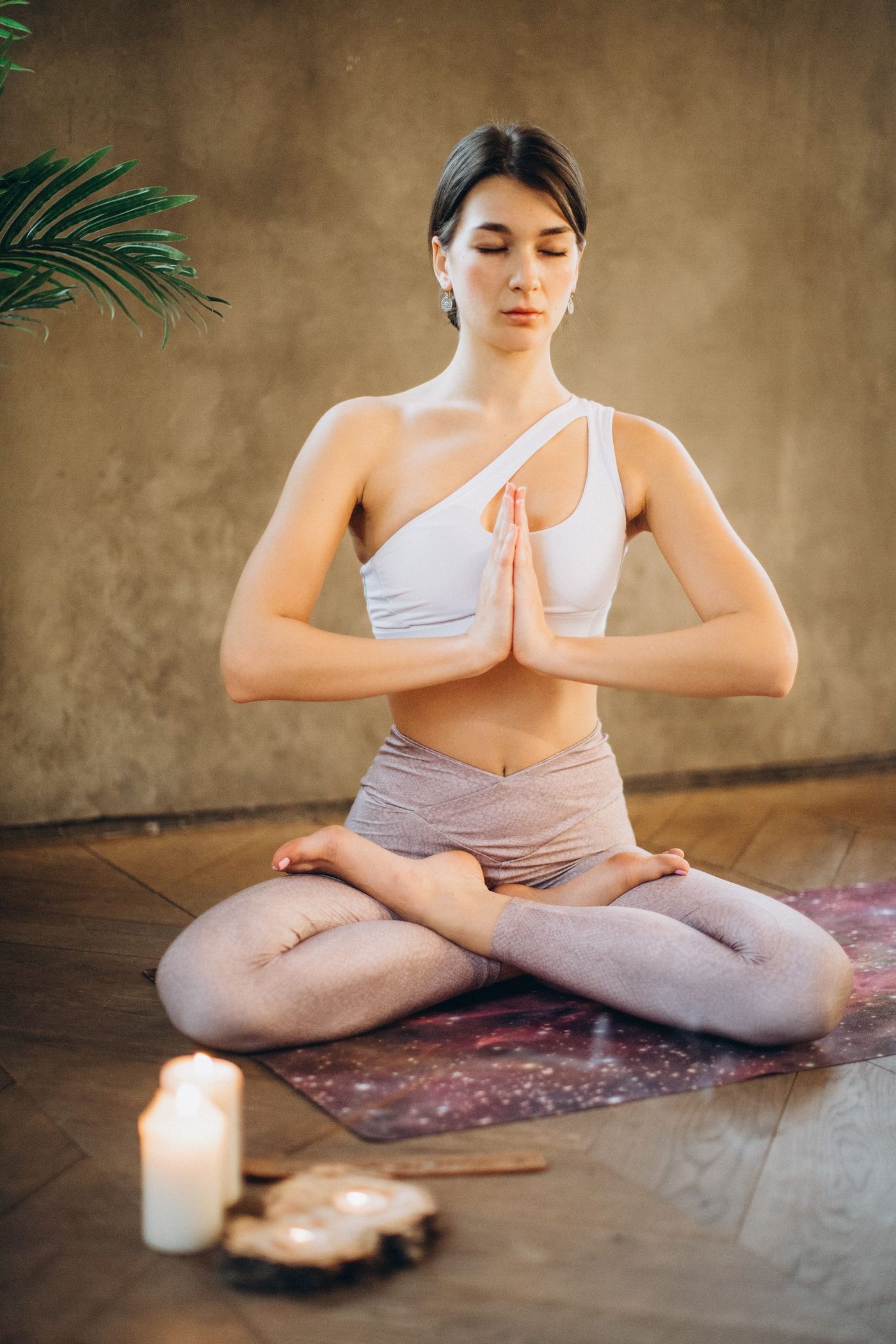
If you are pregnant, injured, or dealing with back pain, consult a doctor before you follow this page. Stop for sharp pain, numbness, dizziness, or chest pain. This is movement education, not a diagnosis or a treatment. Read the medical disclaimer.
Morning yoga and evening yoga are not different religions. They are different jobs. Morning practice is there to help you arrive in the day without rushing. Evening practice is there to help you put the day down. You can do both. You can do one. The failure mode is a rule so strict that a late morning becomes a cancelled practice.
What the morning routines are built to do
The 5-minute, 10-minute, and 20-minute morning routines stand you up. Mountain Pose, a bent-knee fold, Downward-Facing Dog, a lunge, Warrior II, and Tree Pose by the wall. They end with a short rest so you do not sprint out of the room. The long version adds a slow salutation shape and Triangle.
Do these before you pick up the phone if you can. Not because a study proved that phones ruin yoga, but because the phone is how a morning disappears. The mat or the rug is already on the floor. The page is bookmarked. You are upright. That is the whole strategy.
If you are stiff on waking, make the first poses smaller. Knees bend more. The neck stays quiet. Stiffness in the morning that eases as you move is common. Stiffness with sharp pain, or pain that worries you, belongs in the back-pain article and with a clinician, not in a harder backbend.
Eat if you need to. A practice on a completely empty stomach is traditional in some classes and miserable for some people. A small snack is allowed. A large meal right before Chair Pose is unpleasant. You will learn your own timing in a week.
What the evening routines are built to do
The sleep routines stay on the floor. Child’s Pose, a gentle spine, Bound Angle, a strap stretch, a twist, Legs Up the Wall or calves on a chair, and Corpse Pose. The 20-minute sleep routine gives the wall pose three minutes and the final rest three more. Lights low. Phone in another room if you can stand it.
NCCIH’s summary says yoga has been shown to be helpful for sleep in multiple studies of cancer patients, women with sleep problems, and older adults, and that other individual studies have reported improved sleep as well. That is not a finding that “evening is the correct time” or that a specific sequence treats insomnia. It is a reason to try a quiet practice if sleep is something you want to support, and to keep expectations modest. If sleep is a medical problem, talk to a clinician. A routine is not a sleep clinic.
Skip Legs Up the Wall if you are pregnant or if you have been told to avoid inversions, including concerns such as glaucoma or a hiatal hernia. The pose page lists those limits. Calves on a chair is the substitute written into the routine.
Afternoon is allowed
The stress routines and the desk breaks exist because life does not only happen at dawn and at bedtime. A ten-minute downshift at 4 p.m. may be the practice you actually do. It can replace a morning you missed. It does not have to be “made up” later with a longer session. Longer is not the fee for being late.
If you practice in the evening and then feel too alert, you may have chosen a morning sequence at night. Warrior poses and balance are wake-up tools. Swap in the sleep routine. If you practice in the morning and feel sleepy afterward, you may want the shorter morning routine, or breakfast sooner. These are ordinary adjustments. They are not signs that yoga is wrong for you.
How to choose for the next seven days
Pick the slot that is already quiet. If the house is calmer at 6:30 a.m. than at 10 p.m., choose morning and use the 7-day path or the 10-minute morning routine. If evenings are when you can close a door, choose the 10-minute sleep routine and leave mornings alone. Write the choice on the tracker so you are not renegotiating every day.
A mix also works: morning practice on three days, a desk break on two, and one longer evening practice. That is a week. It does not need a new identity. The quiz will point you at a single routine if the menu itself is the obstacle.
What not to decide
Do not decide that you are a morning person or an evening person forever based on one groggy Tuesday. Do not decide that a missed dawn practice means you wait until next Monday. Open the five-minute version. How long to hold a pose explains why short counts. The same idea applies to the week. A short practice in the slot you have is the practice.
Keep the room simple either way. The space guide is a clear floor and a blanket. Morning or evening, that is the whole studio.
If you travel, the five-minute version of whichever slot you chose still works in a hotel room. Chair Pose, a bent-knee fold with hands on the bed, and a twist sitting on the edge of the mattress cover a morning. Child’s Pose on the bed and calves on the chair cover an evening. You do not need the full sequence to keep the week intact. You need the same kind of practice, made smaller, so the habit recognizes itself when you get home.
Source: NCCIH, Yoga: What You Need To Know, sleep summary and the note not to postpone medical care.